
The Wave Hill Walk-off, Sixty Years On
The sixtieth anniversary falls on Sunday 23 August 2026, and I mark it that morning with Remah Naji in the Yarning Circle. Come and join us.
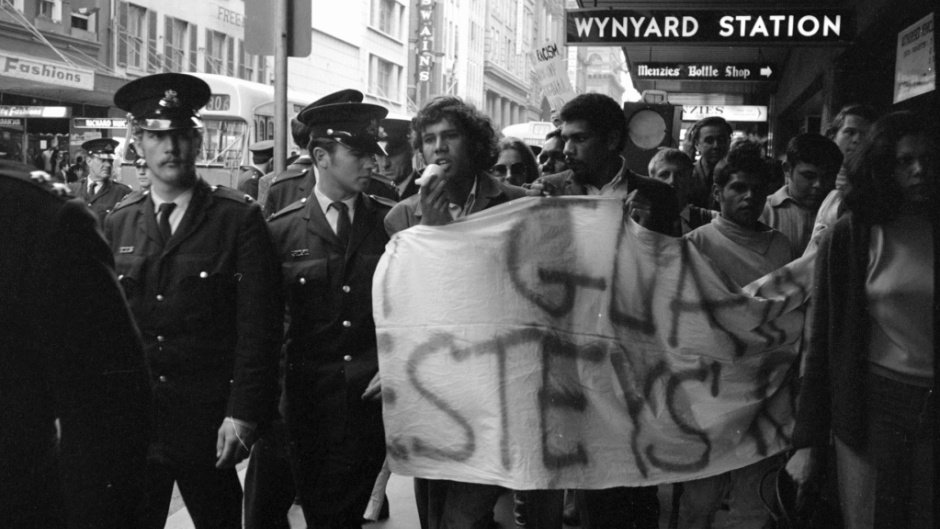
On the morning of 23 August 1966, Vincent Lingiari, a Gurindji stockman, led about two hundred Aboriginal workers and their families off Wave Hill cattle station in the Northern Territory. The station belonged to Vestey Brothers, a British pastoral company that had held the lease since 1914. Aboriginal workers there received rations, tobacco and clothing in place of proper wages, and lived in conditions that an inquiry had criticised as far back as the 1930s.
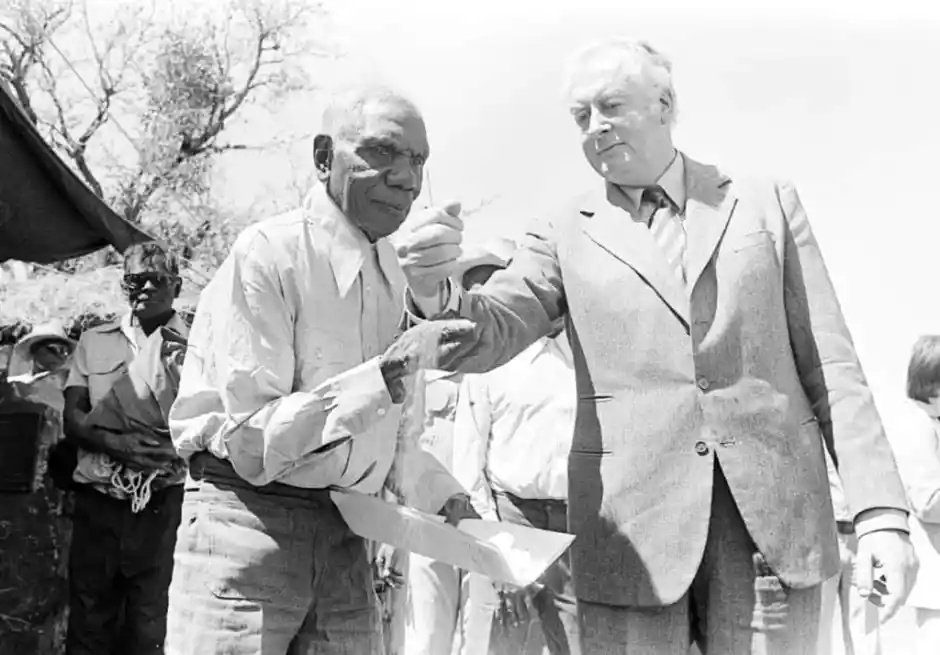
What began as a stand over pay became, within months, a demand for the return of Gurindji land. The strike lasted nine years. On 16 August 1975, Prime Minister Gough Whitlam poured a handful of red soil into Lingiari's hands and returned leasehold title over part of Wave Hill to its Traditional Owners, the first time an Australian government handed land back to an Aboriginal community.
Watch this first · About five minutes
Vincent Lingiari and the Wave Hill Walk-off
ABC Behind the News. A short, plain-language account made for a general audience.
Watch on YouTubeWhy it matters, in six points
- Wages were the beginning, never the whole of it. Unionists who supported the strike understood it as an industrial dispute. The Gurindji understood it as a claim on their own Country, and said so plainly once the walk-off was under way.
- Nine years, not nine days. The Gurindji held their position across nine years, from 1966 until 1975. They moved camp to Daguragu in 1967 to sit closer to their sacred sites and petitioned the Governor-General, who refused them. They stayed anyway.
- The land came back. Whitlam's handful of soil in August 1975 transferred leasehold title to the Gurindji people. Mervyn Bishop photographed the moment, and the image became one of the most recognised in Australian public life.
- The law changed because of it. The Aboriginal Land Rights (Northern Territory) Act 1976 followed directly from Wave Hill, the first Australian legislation allowing First Nations people to claim title on proof of traditional connection to Country.
- A song did the teaching that schools did not. Paul Kelly and Kev Carmody wrote "From Little Things Big Things Grow" in 1991, and it took the Wave Hill story to Australians who had never met it in a classroom.
- Native title followed, decades later. The Gurindji won native title over Wave Hill Station in September 2020, fifty-four years after the walk-off began. The Gurindji Freedom Day Festival marks the anniversary at Kalkarindji each August, this year on the sixtieth anniversary itself.
“We just want our land back.”Vincent Lingiari, Gurindji Elder, 1966
Sixty years on
Remah Naji joins me in the Yarning Circle
The Gurindji walked off on 23 August 1966. On that same date this year I sit down with Remah Naji, a linguist, a community organiser, and the daughter of Palestinian refugees exiled from Yaffah. Speaking to Traditional Owners fighting for their own country, she said she would stand with them, “because I would also like my land back.”
The Freedom Day Festival marks the anniversary at Kalkarindji, on Gurindji country, where the walk-off happened. Here in the south-east, very few gatherings mark the day at all. Ours is one of them.
Sunday 23 August 2026, 11.15 AM
Darnell Room, St John’s Cathedral
373 Ann Street, Brisbane
Free, and everyone is welcome.
The common ground I see
Two peoples geographically distant, but undergoing a common experience. In Australia and in Palestine, colonists arrived intending to stay, and staying meant moving, managing, or removing the people already on the land. Historians call it settler colonialism. My family calls it what happened to us.
The histories are not the same and I will not pretend they are. They share a structure, and I have watched both of them run through my own lifetime.
- Dispossession arrives on paper. The colonial government signed Gurindji Country over to a pastoralist in 1883. Nobody asked the people living on it. The instrument was a document rather than a battle, and that is how most of this continent changed hands. The history of Palestine holds the same paperwork: declarations, mandates, and partition plans, all of them written somewhere else about somebody else's home.
- The claim is always about the land. Unionists heard an industrial dispute at Wave Hill. The Gurindji were talking about Country. That mistake gets made every time. The world hears a complaint about conditions and misses a claim to land, and I watch it make the same mistake about Gaza and the West Bank today.
- Plain words do the work. Lingiari said he wanted his land back. Palestinians driven out in 1948 and again in 1967 say the same plain thing in the same few words. Neither claim needs a theory to explain it, and governments have answered both. They answered the Gurindji with a refusal, and with decades of law that controlled where Aboriginal people lived and what anyone paid them. They answer Palestinians with occupation, blockade, and mass killing.
- Waiting is not consent. The Gurindji waited nine years and a Governor-General told them no. They stayed. A refusal settles nothing, a claim does not expire because a government rejects it, and people who have kept making theirs for seventy-seven years are not being unreasonable.
- It is genocide. The United Nations Commission of Inquiry, the UN Special Rapporteur, Amnesty International, and Human Rights Watch have each concluded that Israel's conduct in Gaza meets the definition. Israel rejects that finding, and so do some governments. I accept it. My people know exactly what it looks like when a state decides a population stands in the way of the land, and I will not reach for a softer word out of politeness.
- Neither claim asks another people to disappear. The Gurindji sought their own return, not anyone else's removal, and that is the line I hold. Saying Palestinians have a right to their land says nothing against Jewish people, and anyone who uses my words that way has misunderstood me.
Australians hold a wide range of views about Israel and Palestine. I hold this one, and I answer for it under my own name.
Nakba and Naksa sets out the two displacements that made refugees of hundreds of thousands of Palestinians, among them families who now live in Australia.
Sources
- National Museum of Australia, Wave Hill Walk-Off, Defining Moments in Australian History.
- National Archives of Australia, The Wave Hill walk-off.
- SBS NITV, Explainer: what was the Gurindji land handback?
- Department of Climate Change, Energy, the Environment and Water, Wave Hill Walk-Off Route, National Heritage listing.
- Amnesty International Australia, The Wave Hill walk-off: how it sparked a land rights movement.
- Gurindji Aboriginal Corporation, Gurindji Freedom Day Festival, Kalkarindji, 21 to 23 August 2026.
- Amnesty International, on the UN Commission of Inquiry finding of genocide in Gaza, September 2025, and its own investigation of December 2024.