
Colours from Country
Colours used in this site design are rooted in Mitakoodi Country, Pimurra (north-west Queensland), and Cloncurry, my place of origin.
Each colour is adapted from a natural counterpart in Country.
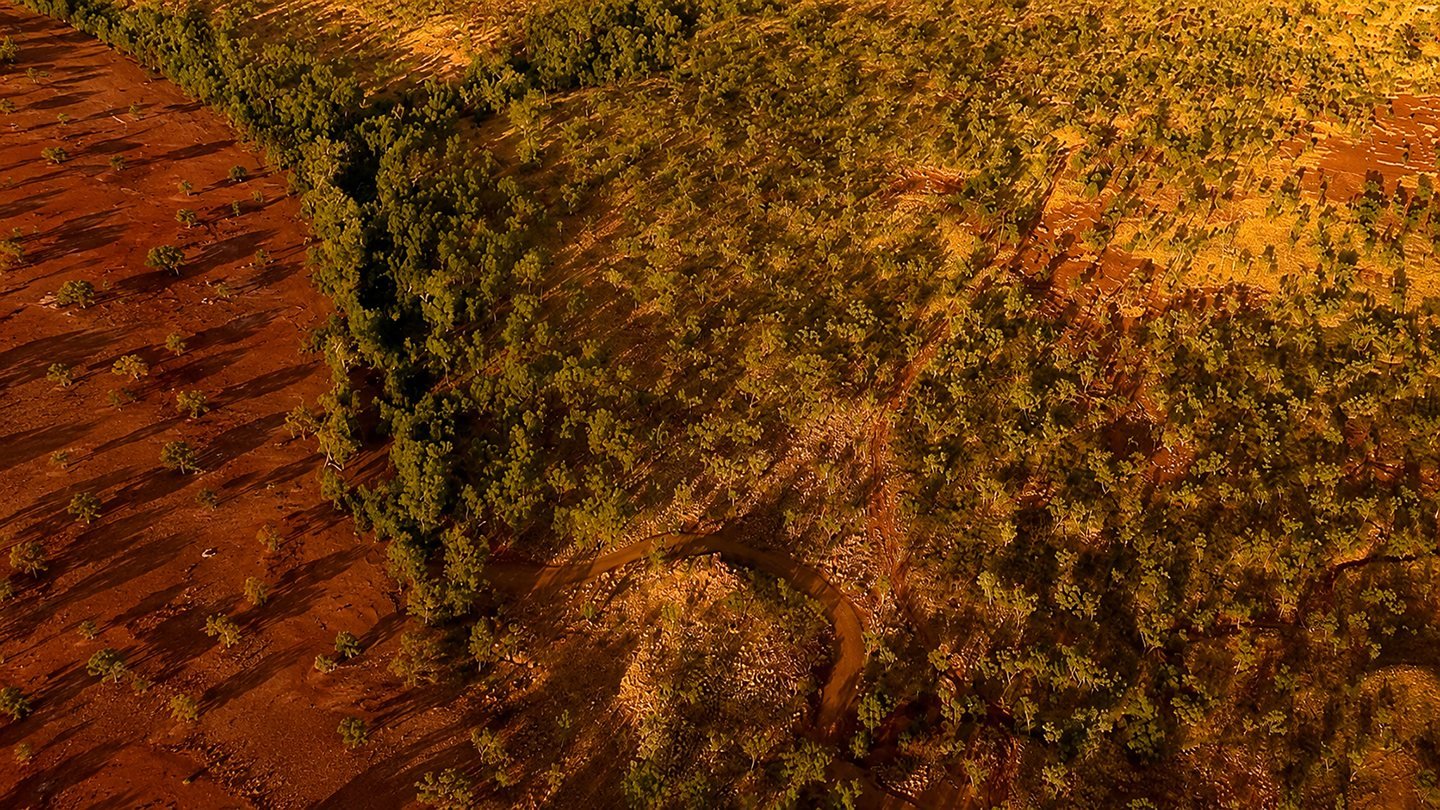
Earth red. The iron-rich red of the soil and stone of the country I am from: Pimurra (Cloncurry). This colour appears throughout as accent and emphasis: in marks that signal something important.
This is my country from the air, early on a June morning, red ground on one side and gold spinifex on the other, with a track curving between them. Whoever took it was flying out of Cloncurry and turned to look down as they went. You can leave Pimurra, but you keep looking back at it.
#8b2f1a
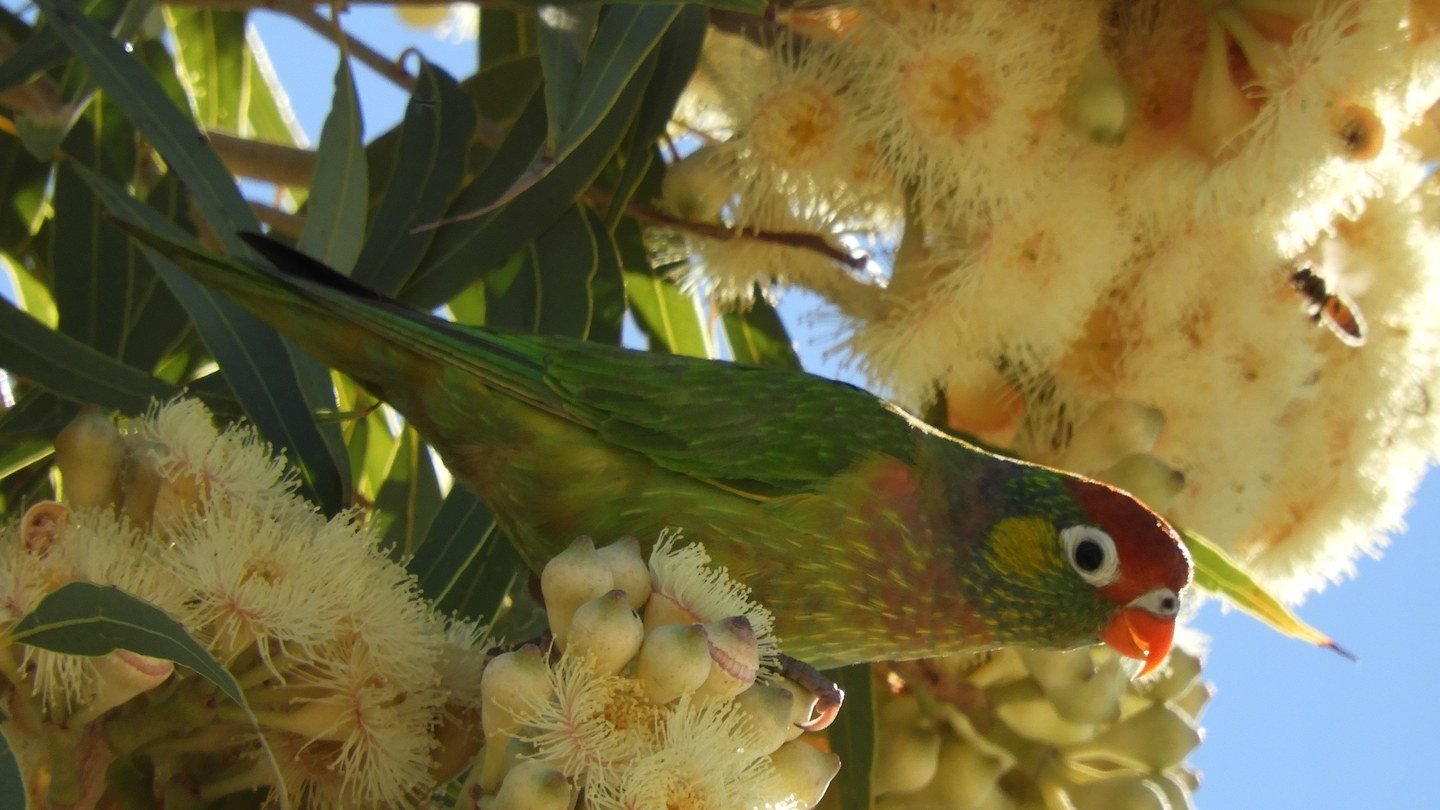
Coolibah green. The grey-green of the coolibah and the river gums, the colour the trees of this country hold through every season. Here one of the country’s own wears it: a varied lorikeet feeding in a flowering gum at Pimurra (Cloncurry).
#6b7d5a

River blue. The deep slate-indigo of still water on the Cloncurry River, in the same north-west Queensland country. The darker blue water becomes when riverbed and bank hold it, taking the green of trees and the pale of cloud into itself.
#4D6290
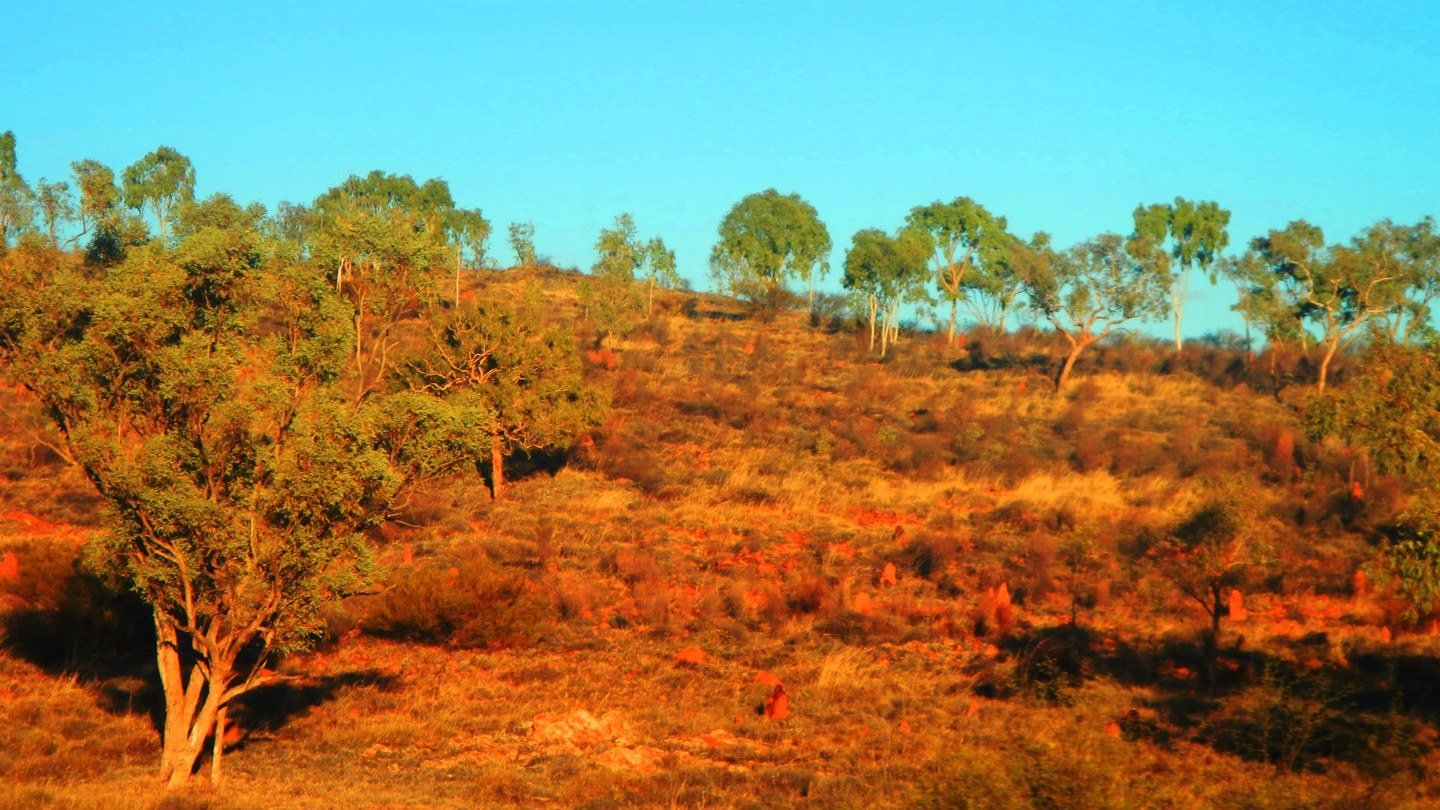
Yellow ochre. The colour of inland sun early and late in the day, of dry grass catching light, of ochre as it has been used in this country for tens of thousands of years. This hillside stands in the first sun of a winter morning, south-west of Pimurra. A warm and softening note onsite.
#c8881f
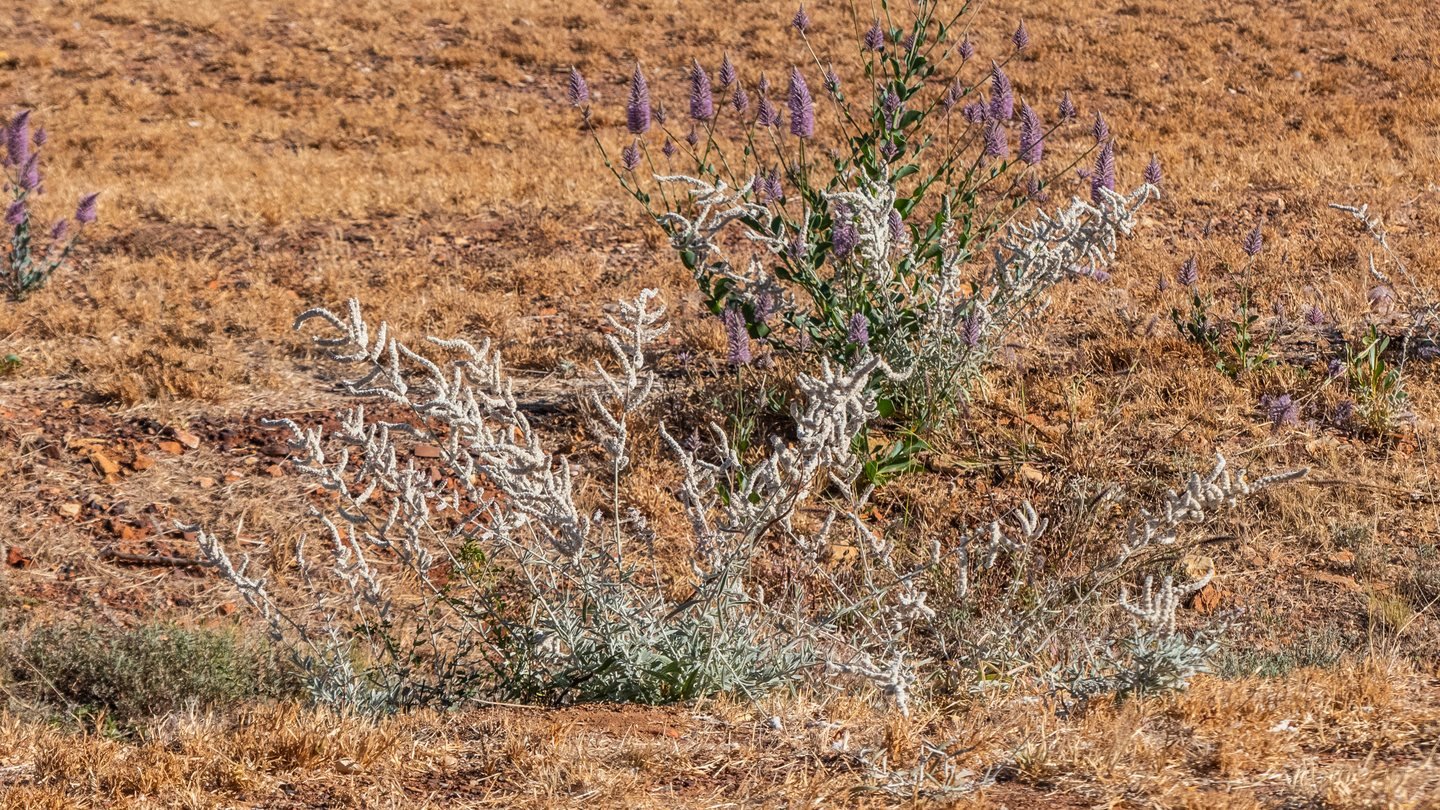
Warm cream. The colour of dry summer grass, of paper aged in sunlight. Here it is kapok bush flowering among the dry grass at Mount Isa. Background chosen so that nothing sits on bare white screen.
#f4ede2
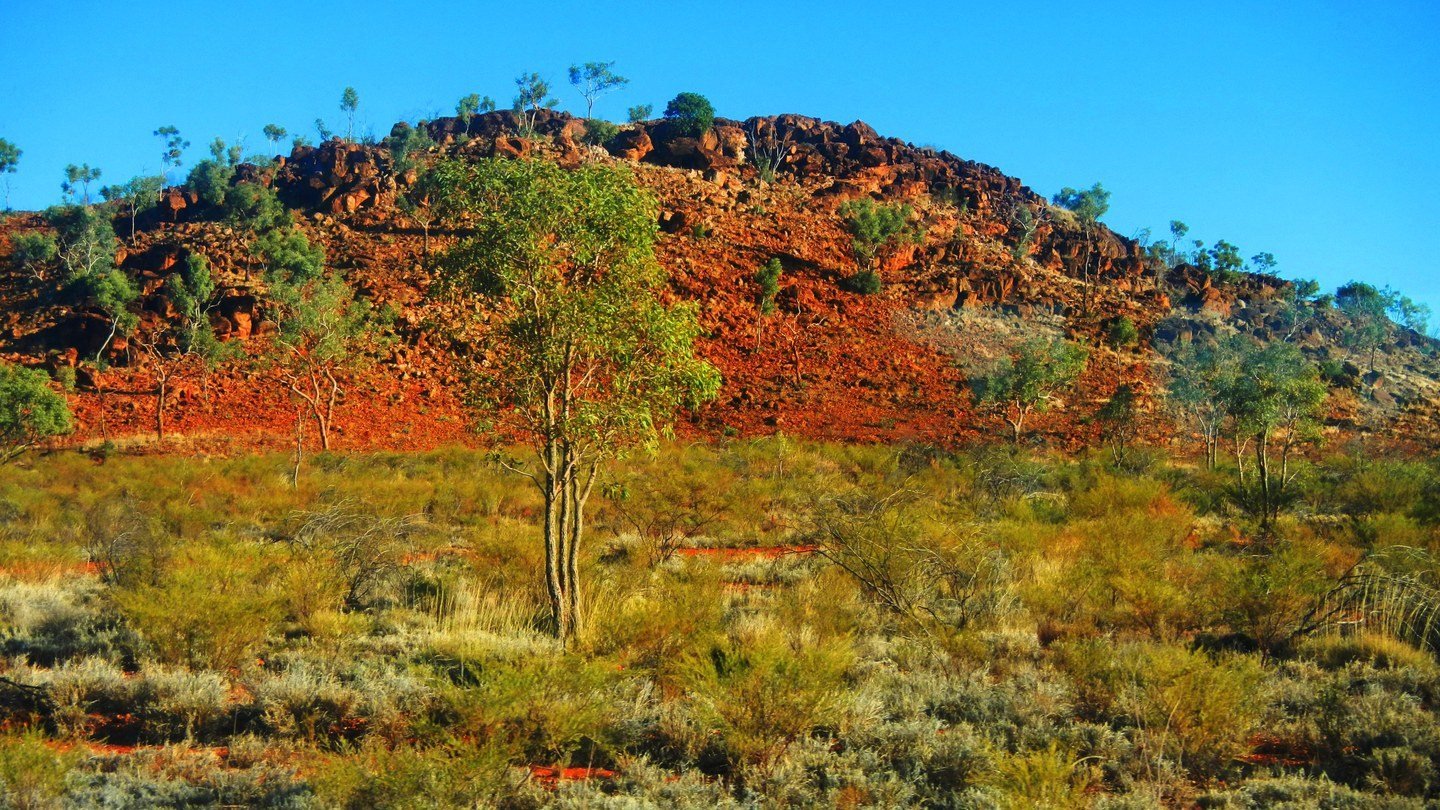
Terracotta dust. The pale, weathered face of the iron-rich stone: rock refined by sun and wind into a finer, warmer note than fresh earth-red. This rise stands near Duchess, in the Selwyn Range country south of Pimurra. Used through the site as hairline rules, and as quiet panel.
#e8c4a8
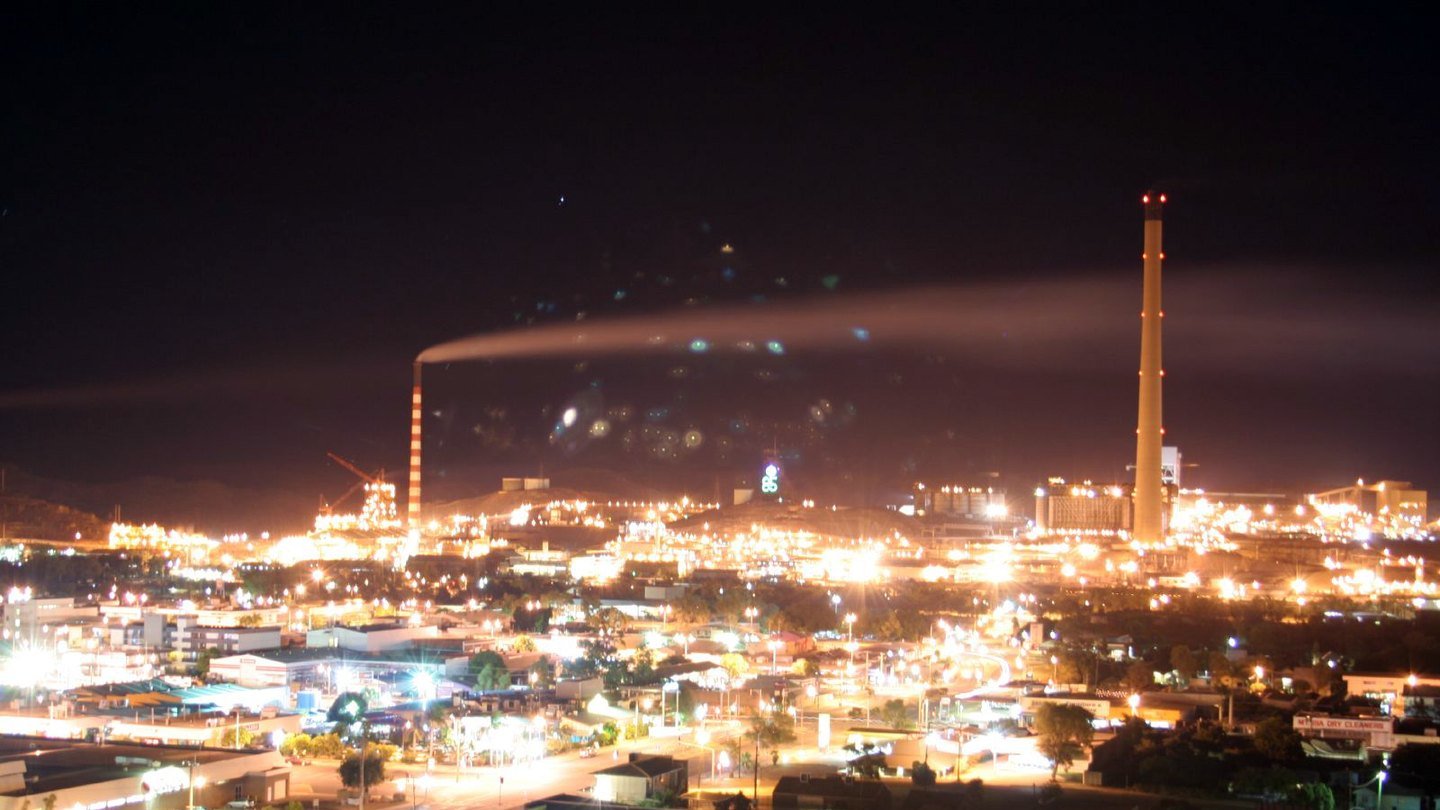
Deep ink. The dark of Queensland Country at night. Over Mount Isa the mine burns all night, and the sky above it stays this colour. The dark ink colour of text, chosen over pure black so that words arrive comfortably to the eye.
#1a1410

Mulla mulla lilac. After rain, the red soils of north-west Queensland flower. Pink mulla mulla rises in feathery lilac spikes across the plains of Cloncurry country, sometimes in their thousands, where the ground had seemed to hold nothing at all. Graziers call them lambs' tails. This colour belongs to the door where I ask something of you: the country does not bloom on its own schedule, it blooms when the rain arrives.
#9a6b94

Copper green. The muted blue-green of the copper minerals, chrysocolla among them, held within the copper-bearing rock of Mitakoodi Country around Pimurra. It is a mineral colour of the Country: between River blue and Coolibah green, but belonging to the stone beneath them. On this site it marks the Keep Walking door.
#3f716b
Other tones used on the site, deeper paper, softer ink, are derivations of these. Each comes from the same place.
Photographs on this page are credited on the Image Credits page.